

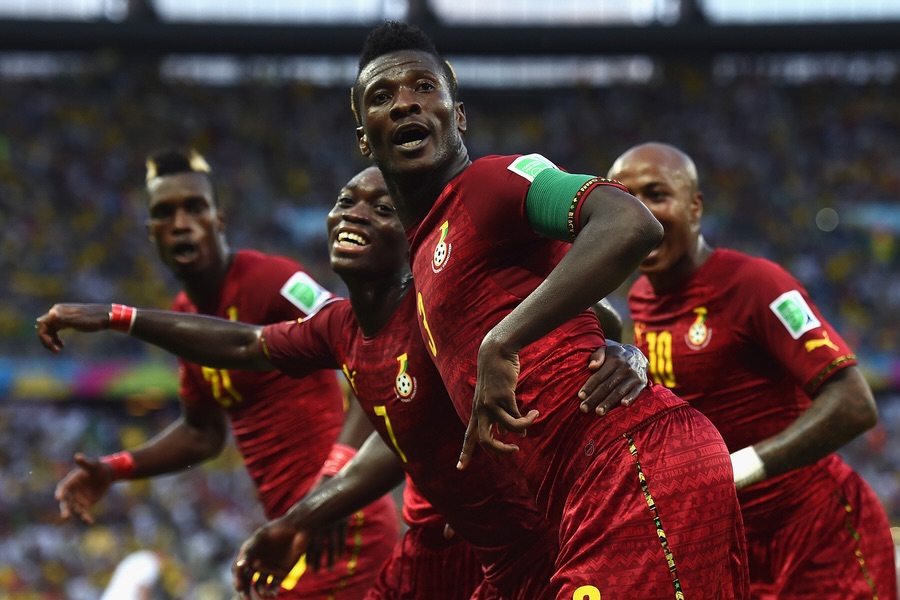
For Asamoah Gyan, the heaviest moments in a Ghana shirt did not arrive under the bright lights of World Cups or against football’s global superpowers. Instead, they came quietly, in fixtures where victory was assumed and failure unthinkable.
The former Black Stars captain, widely celebrated as one of Ghana’s most iconic footballers, has revealed that the true psychological strain of international football lay in matches against lower-ranked opponents, games where expectation eclipsed everything else.
Gyan’s international journey began to capture global attention at the 2006 FIFA World Cup in Germany. His goals on that stage signalled the arrival of a fearless striker, one who would go on to rewrite history. Over the years, he became Africa’s highest goalscorer at the World Cup and Ghana’s all-time leading marksman, achievements that cemented his legendary status.
Yet, behind the records and accolades, the pressure told a different story.
Speaking on a recent podcast with former England and Manchester United defender Rio Ferdinand, Gyan reflected on the mental toll of representing Ghana, explaining that the burden was often heavier when the Black Stars were overwhelming favourites.
“There was always pressure playing for Ghana,” Gyan said. “Where I felt it most was playing against the minnows, but no disrespect to them.
“Playing against teams that we were ahead of them statistically, when we go into such games they have nothing to lose, but we have something to lose. That is when I really felt the pressure. But playing against the top teams, I didn’t feel it as much.”
According to Gyan, matches against elite nations brought freedom, the freedom to compete without the suffocating weight of expectation. Against perceived underdogs, however, every missed chance felt amplified, every mistake unforgivable.
The former Sunderland, Al Ain and Shanghai SIPG striker officially stepped away from professional football in June 2023, drawing the curtain on a career that spanned continents and generations. His legacy, etched deeply into Ghanaian and African football history, remains defined not only by goals and milestones, but by the unseen pressures he carried each time he led the Black Stars onto the pitch.