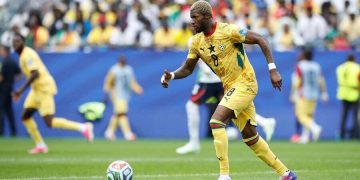

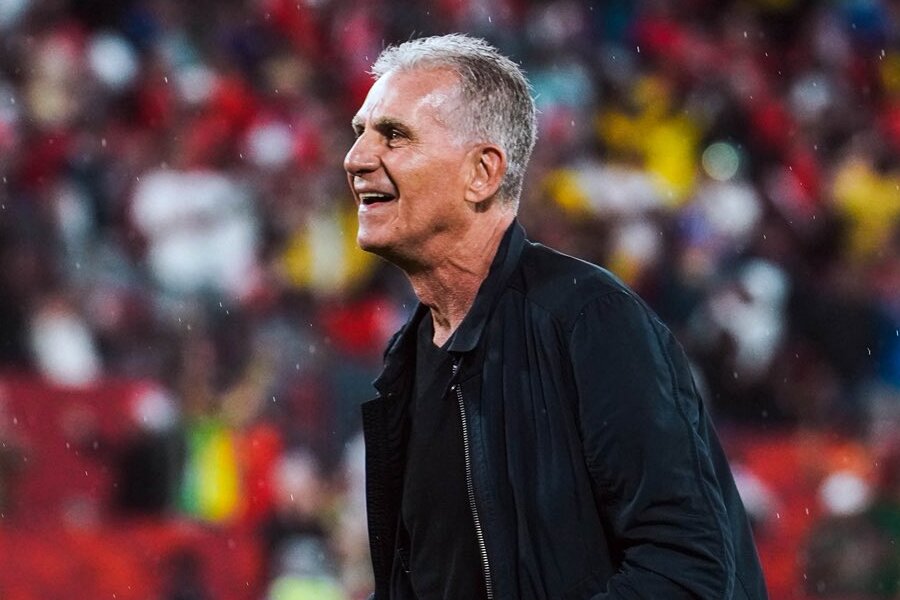
Former Ghana Football Association (GFA) vice-president George Afriyie has criticised Carlos Queiroz’s tactical philosophy at the 2026 FIFA World Cup, insisting the Portuguese coach’s defensive orientation was at odds with Ghana’s traditional football identity.
Queiroz guided the Black Stars into the knockout phase for the first time since the 2010 World Cup, with Ghana showing considerable defensive organisation during the tournament, including a goalless stalemate against England.
But despite progressing from the group stage, Ghana’s journey came to an abrupt end in the Round of 32, where they suffered a narrow 1-0 defeat to Colombia.
Afriyie believes the tournament exposed a fundamental mismatch between Queiroz’s tactical outlook and the attacking character historically associated with Ghanaian football.
Speaking on Sporty FM, the former GFA presidential candidate argued that the role of the association’s technical leadership should be to identify a coach whose philosophy complements the country’s footballing traditions.
“And exactly what they label the coach is what we witness at the World Cup. But you see, this is where a technical director comes in. If you are a Ghana Football Association technical director, who is well-versed with the style of Ghanaian football, a defensive-minded coach doesn’t fit up here,” he said.
Afriyie was also keen to distinguish between playing with a lone striker and adopting an inherently defensive system, dismissing the notion that Milovan Rajevac’s use of one forward automatically represented a conservative tactical setup.
“Look, people will say that Milo came to play one-top. No, playing one-top doesn’t necessarily mean that you are playing defensive,” he added.
According to Afriyie, Ghana can still maintain an aggressive attacking identity with a single recognised striker, provided the forward receives sufficient support from creative midfielders and attacking players.
He pointed to some of the combinations that characterised previous Black Stars teams as evidence that a one-striker formation can coexist with an expansive approach.
“A certain Asamoah Gyan with Sule Muntari, Kwadwo Asamoah, or even Stephen is different. It’s a more attacking approach,” Afriyie said.
For Afriyie, Ghana’s attacking tradition should have been a major consideration when determining the tactical direction of the national team, particularly given the wealth of offensive talent available to Queiroz at the World Cup.
George Afriyie questions Carlos Queiroz’s future as Black Stars head coach
He noted that Ghana travelled to the tournament with an array of wingers and attacking players capable of playing with greater freedom and invention.
“And that is what we are noted for. You went to the World Cup with a lot of wingers who like to express themselves,” he said.
Afriyie further suggested that the make-up of the 26-man squad itself provided the coach with enough attacking resources to pursue a more adventurous game plan.
“Look at the list of the 26-man squad. It shows that we even went with a minimum defensive-style kind of approach. But that’s your coach,” he concluded.
Ghana’s attacking shortcomings were reflected in their numbers, with the Black Stars managing just two goals across their four matches at the tournament.
The team will now shift focus to the 2027 Africa Cup of Nations qualifying campaign, with the continental tournament scheduled to be hosted jointly by Kenya, Tanzania, and Uganda.